I. Overview of Drainage and Wastewater Treatment Systems
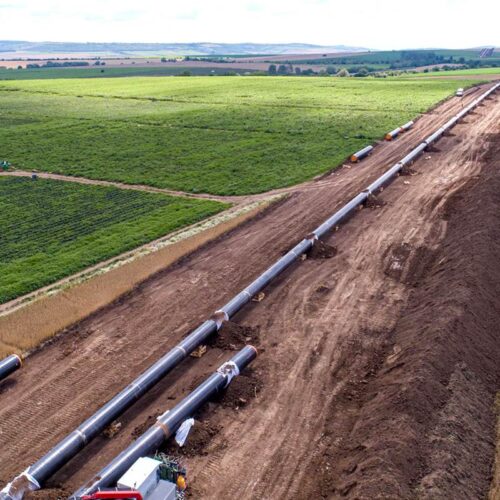
Drainage and wastewater treatment systems are essential components of urban infrastructure and industrial facilities. They are primarily responsible for collecting, conveying, treating, and discharging domestic sewage, industrial wastewater, and stormwater.
Depending on their intended applications and methods of conveyance, these pipeline systems generally include gravity drainage pipelines, pressurized pipelines, pumping station connection pipelines, and process pipelines within wastewater treatment plants.
Main Applications Include:
- Municipal Drainage Systems: Collect and convey domestic sewage and stormwater generated in urban areas.
- Sewage Treatment Plants: Connect sewage collection systems, treatment equipment, pumping stations, and discharge facilities.
- Stormwater Drainage Systems: Collect and convey rainwater from roads, buildings, and industrial areas.
- Industrial Wastewater Pipelines: Transport wastewater generated during industrial production processes to centralized treatment facilities.
The operating conditions of pipelines vary depending on the specific engineering application. For example, buried municipal drainage pipelines need to account for soil loads, groundwater conditions, and external corrosion. Pump station discharge pipelines, on the other hand, must be designed to withstand operating pressure and pressure fluctuations.
Therefore, steel pipe selection should not be based solely on pipe diameter and wall thickness. Actual project conditions must also be taken into account to ensure an appropriate selection.
II. Applications of Steel Pipes in Drainage and Wastewater Treatment Projects
i. Municipal Drainage Systems
Municipal drainage systems are primarily responsible for collecting and conveying sewage and stormwater generated in residential areas, commercial districts, and public spaces.
Steel pipes may be used in the following parts of drainage projects:
- Large-diameter main drainage pipelines
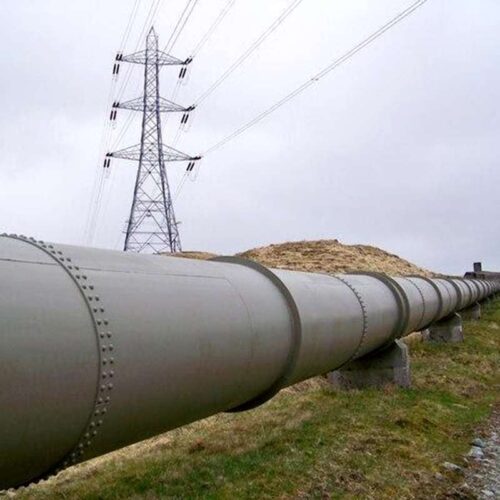
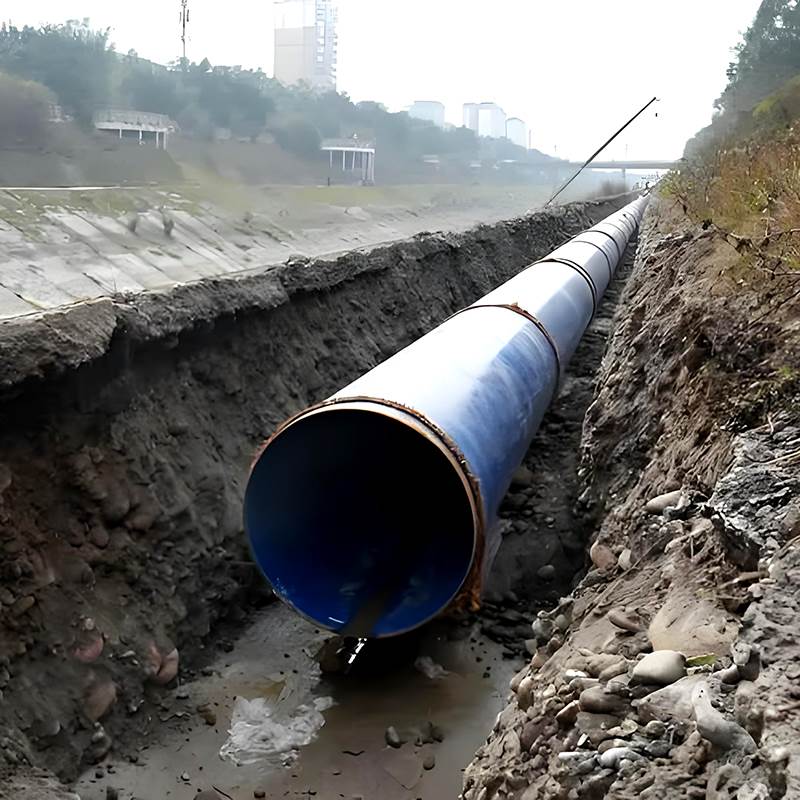
- Pressurized sewage transmission pipelines
- Inlet and outlet pipelines at drainage pumping stations
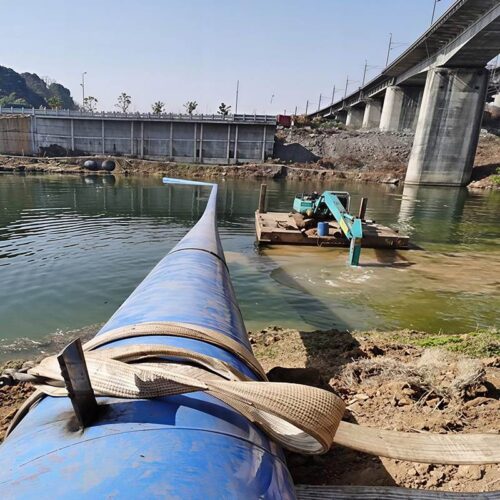
- Drainage pipelines crossing roads, railways, and rivers
- Pipeline sections with special requirements for structural strength, connection methods, or construction conditions
For gravity drainage networks, pipe selection is primarily based on the design flow rate, pipeline gradient, burial depth, external loads, ground conditions, and joint requirements.
For pressurized drainage pipelines, particular attention must be paid to operating pressure, pressure fluctuations, pipe strength, and connection reliability.
Steel pipes are not the preferred material for every municipal drainage project. Concrete pipes, plastic pipes, and other materials are also widely used in different types of drainage systems. Whether steel pipes are suitable should be determined based on the engineering design and actual construction conditions.
Key factors to consider when purchasing steel pipes:
- Whether the pipeline operates under gravity flow or pressure.
- Burial depth and traffic loads at ground level.
- Soil corrosivity and groundwater conditions.
- Pipeline connection methods and on-site welding requirements.
- Design service life and corrosion protection requirements.
ii. Sewage Treatment Plants
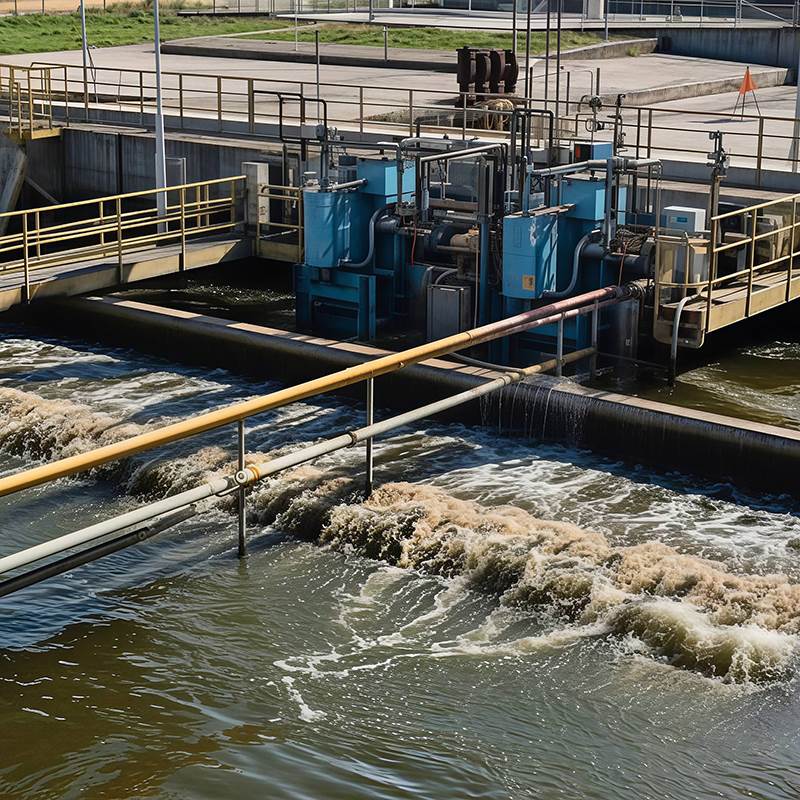
Sewage treatment plants use various treatment processes to treat collected domestic sewage and industrial wastewater.
Within a sewage treatment plant, pipelines are responsible not only for conveying wastewater but also for connecting different treatment equipment and process facilities.
Steel pipes may be used in the following applications:
- Raw sewage transmission pipelines
- Inlet and outlet pipelines at sewage pumping stations
- Connection pipelines between different treatment units
- Sludge transmission pipelines
- Treated effluent discharge pipelines
- Equipment and process piping
The operating media and environmental conditions can vary significantly depending on the location and function of each pipeline.
For example, raw sewage pipelines may carry wastewater containing suspended solids, organic matter, and corrosive substances, while the operating conditions of treated effluent pipelines may be relatively stable.
Therefore, the selection of steel pipes and corrosion protection systems should be based on the specific characteristics of the conveyed medium.
The key parameters to confirm include:
- Conveyed medium and its chemical composition
- Operating temperature
- Operating pressure
- Wastewater pH level
- Suspended solids and particulate matter content
- Presence of corrosive gases such as hydrogen sulfide
- Whether regular pipeline cleaning is required
For wastewater containing sulfides, acidic substances, or other corrosive components, particular attention should be paid to the suitability of the internal lining material and corrosion protection coating.
iii. Stormwater Drainage Systems
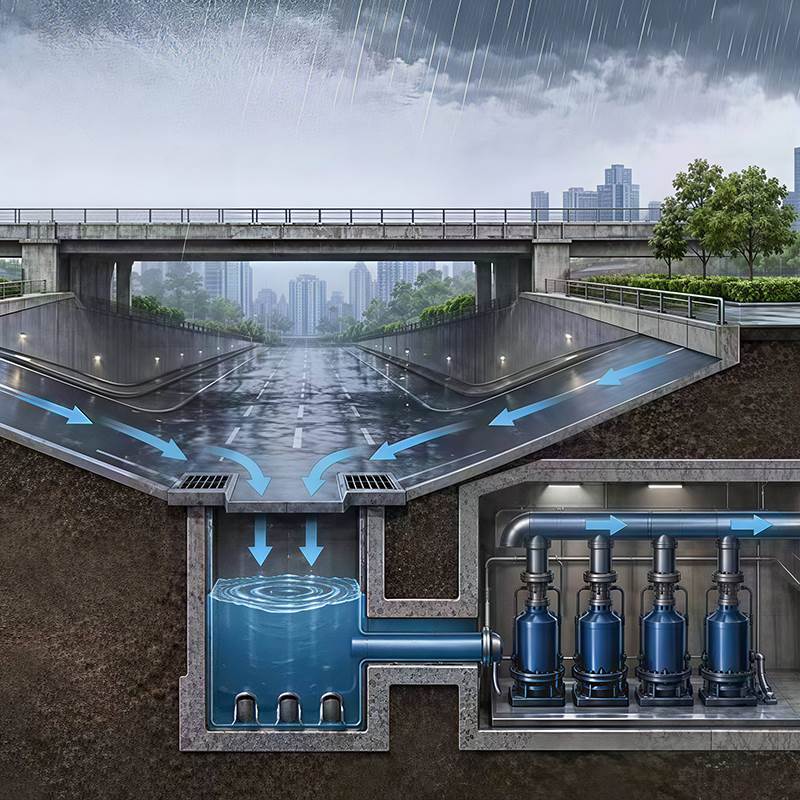
Stormwater drainage systems are primarily designed to collect and convey surface runoff generated during rainfall, preventing water accumulation on roads, around buildings, and in industrial areas.
Steel pipes may be used in the following applications:
- Large-diameter main stormwater drainage pipelines
- Stormwater collection and conveyance pipelines
- Discharge pipelines at stormwater pumping stations
- Drainage pipelines crossing roads, railways, and rivers
- Connection pipelines to rivers, reservoirs, and other discharge outlets
The required pipe diameter cannot be determined solely by the overall scale of a project. It must be calculated based on hydraulic design parameters such as the catchment area, design rainfall intensity, runoff coefficient, and design return period.
For large-diameter stormwater transmission pipelines, the following factors should also be considered:
- Maximum design flow rate
- Water flow velocity
- Sediment and debris accumulation
- Internal pipeline cleaning and maintenance requirements
- Pipeline foundation conditions and external loads
If stormwater is conveyed through a pressurized pipeline system, operating pressure and potential pressure fluctuations must also be taken into account.
iv. Industrial Wastewater Pipelines
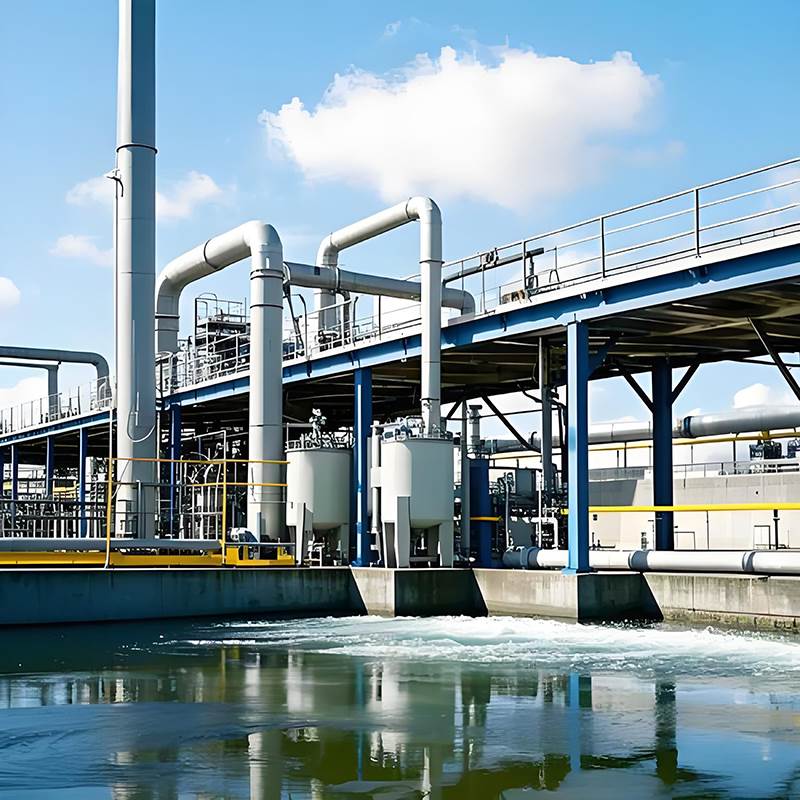
The composition of industrial wastewater is closely related to the manufacturing processes involved, and wastewater characteristics can vary significantly from one industrial facility to another.
Some types of industrial wastewater may contain oils, salts, acidic or alkaline substances, suspended particles, and other corrosive chemical components.
Steel pipes may be used in the following applications:
- Internal wastewater collection and transmission pipelines within factories
- Centralized industrial wastewater collection networks in industrial parks
- Inlet and outlet pipelines at industrial wastewater treatment plants
- Connection pipelines for wastewater pumping stations
- Industrial wastewater discharge pipelines
Compared with ordinary municipal sewage, the selection of corrosion protection systems for industrial wastewater pipelines generally requires greater attention to the specific chemical composition of the conveyed medium.
Before determining the pipeline material and internal anti-corrosion system, it is advisable to collect the following information:
| Inspection Item | What Needs to Be Confirmed |
|---|---|
| pH Level | Whether the wastewater is acidic, alkaline, or neutral |
| Chemical Composition | Whether it contains acids, alkalis, salts, or other corrosive substances |
| Concentration | Content or concentration of corrosive substances |
| Temperature | Normal operating temperature and maximum temperature |
| Solid Particles | Whether it contains sediment or other abrasive particles |
| Corrosive Gases | Whether gases such as hydrogen sulfide are present |
| Operating Mode | Whether wastewater is conveyed continuously or intermittently |
This information will directly influence the selection of steel pipe material, internal anti-corrosion materials, and coating structure.
III. Types of Steel Pipes Used in Drainage and Wastewater Treatment Projects
Steel pipes manufactured using different production processes have distinct characteristics and application ranges. The appropriate type should be selected based on pipe diameter, wall thickness, design pressure, applicable standards, and specific engineering requirements.
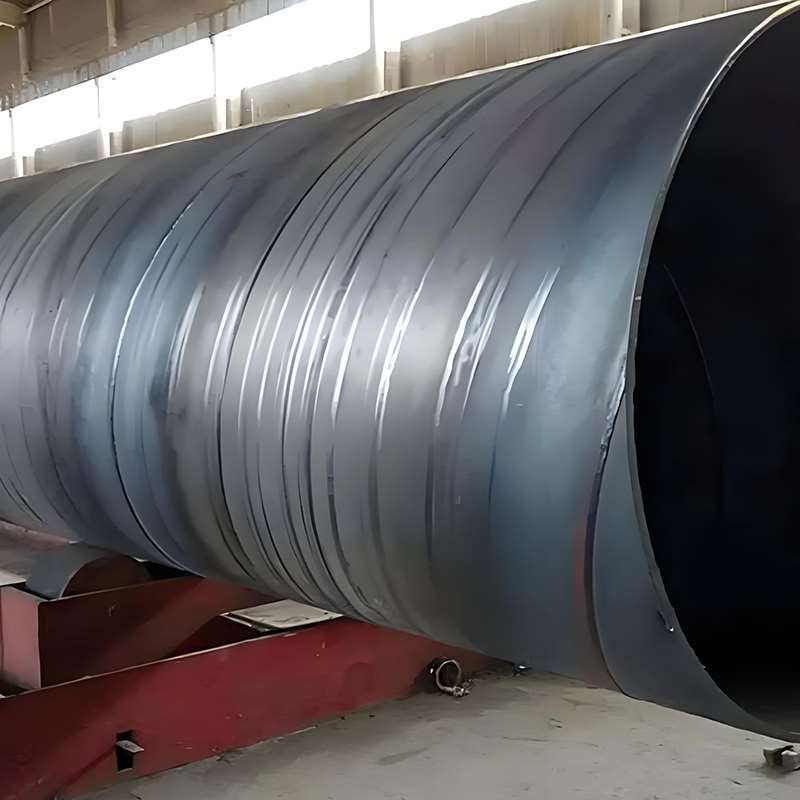
i. SSAW Steel Pipe (Spiral Submerged Arc Welded Steel Pipe)
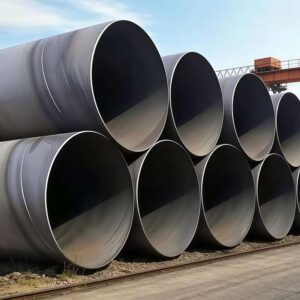
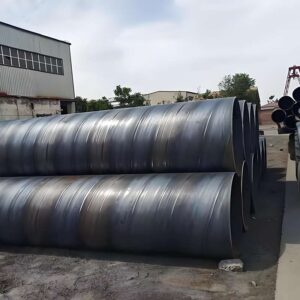
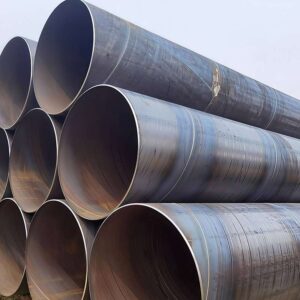
SSAW steel pipe is manufactured by forming a steel strip into a spiral-shaped pipe blank and welding the seam using the submerged arc welding (SAW) process.
In drainage and wastewater treatment projects, SSAW steel pipes may be used in the following applications:
- Large-diameter municipal drainage mains
- Stormwater drainage pipelines
- Pressurized sewage transmission pipelines
- Discharge pipelines at drainage pumping stations
SSAW steel pipes can be manufactured in various outside diameters and wall thicknesses to meet project requirements. The available size range depends on the production equipment and manufacturing capabilities.
When purchasing, particular attention should be paid to the applicable standards, steel grade, dimensional tolerances, weld inspection requirements, and pressure design requirements.
ii. LSAW Steel Pipe (Longitudinal Submerged Arc Welded Steel Pipe)
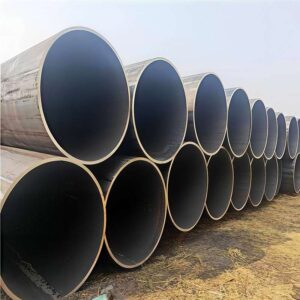
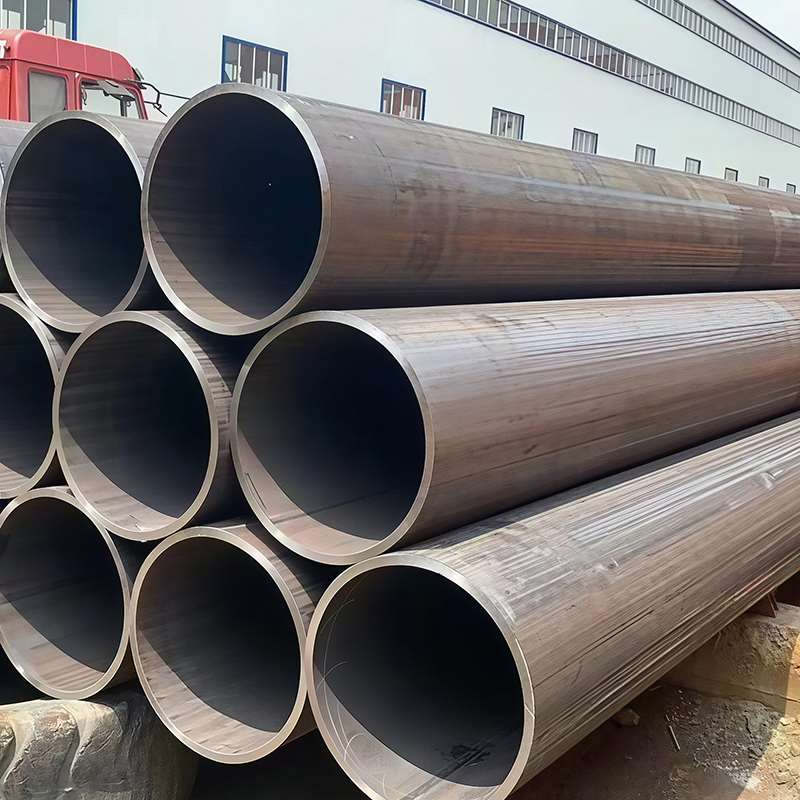
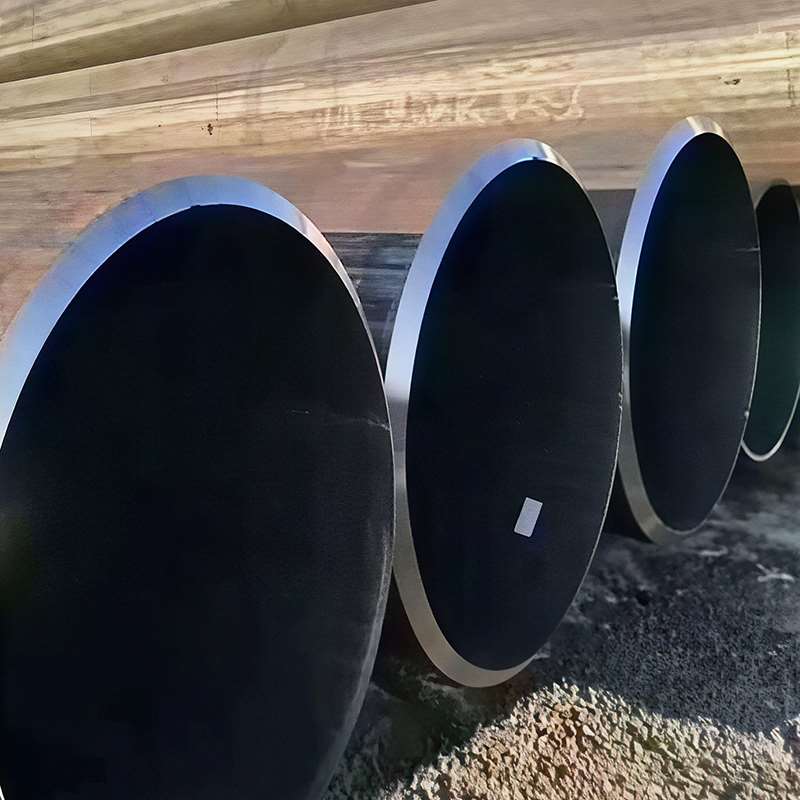
LSAW steel pipes are manufactured by forming steel plates into a cylindrical shape and welding the seam longitudinally along the pipe body using the submerged arc welding (SAW) process.
In drainage and wastewater treatment projects, LSAW steel pipes may be used in the following applications:
- Large-diameter pressurized transmission pipelines
- Pump station connection pipelines
- Pipelines with special dimensional requirements
- Projects with specific requirements for longitudinally welded steel pipes
The selection of LSAW steel pipes should be based on the engineering design, dimensional requirements, and technical specifications. LSAW pipes should not be considered superior to SSAW pipes in all applications.
iii. ERW Steel Pipe (Electric Resistance Welded Steel Pipe)
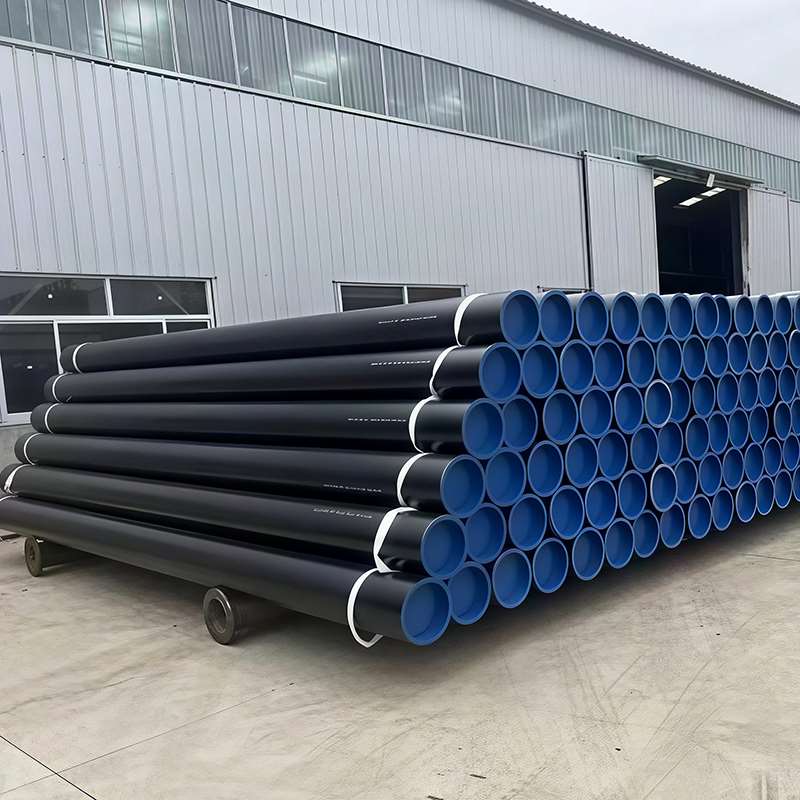
ERW steel pipes are manufactured by forming steel strips into a tubular shape and joining the edges using the electric resistance welding process.
Depending on the available manufacturing specifications and applicable standards, ERW steel pipes may be used in the following applications:
- Small- and medium-diameter sewage transmission pipelines
- Equipment connection pipelines
- Auxiliary drainage pipelines
- Certain process pipelines within sewage treatment plants
Their suitability for a specific application should be determined based on the outside diameter, wall thickness, operating pressure, and project requirements.
iv. Seamless Steel Pipe
Seamless steel pipes are manufactured through processes such as piercing and rolling, with no longitudinal or spiral weld seams along the pipe body.
In drainage and wastewater treatment projects, they may be used in the following applications:
- Connection pipelines for pumps and equipment
- Small-diameter pressurized pipelines
- Pipelines operating under special service conditions
- Applications where seamless steel pipes are explicitly specified in the engineering documents
It is important to note that seamless steel pipes are not necessarily safer under all pressure conditions. Their actual pressure-bearing capacity still depends on the steel grade, wall thickness, outside diameter, manufacturing quality, and design requirements.
Comparison of different steel pipe types:
| Steel Pipe Type | Main Application Areas to Consider |
|---|---|
| SSAW | Large-diameter drainage, stormwater conveyance, and liquid transmission |
| LSAW | Projects with specific requirements for longitudinally welded steel pipes |
| ERW | Small- and medium-diameter drainage and auxiliary pipelines |
| Seamless | Equipment connections and applications involving specific pressure conditions |
The manufacturing process is only one of the factors to consider when selecting steel pipes. The suitability of a pipe for a particular project should not be determined solely by its weld seam configuration.
IV. Steel Pipe Materials and Specification Selection
The material grade and specifications of steel pipes directly affect their load-bearing capacity, operating conditions, and overall project cost.
Before requesting a quotation, buyers should try to clearly define the steel grade, outside diameter, wall thickness, pipe length, applicable standards, and end preparation requirements.
i. Common Steel Grades
The following steel grades may be specified for drainage and wastewater treatment projects:
- Q235B
- Q355B
- API 5L Grade B
- API 5L X42
- API 5L X52
These grades belong to different material standards and should not be considered fully equivalent.
For example, Q235B and Q355B are Chinese steel grades, while API 5L Grade B, X42, and X52 are pipeline steel grades specified under API 5L.
For actual procurement, the chemical composition, mechanical properties, and any additional technical requirements should be verified against the standards specified for the project. Steel grade substitutions should not be made without the buyer’s approval.
ii. Key Steel Pipe Specifications
The following parameters need to be clearly defined when purchasing steel pipes:
| Parameter | Specification / Technical Requirements |
|---|---|
| Outside Diameter (OD) | DN200–DN3600, or as specified in the project design |
| Wall Thickness (WT) | 5–25 mm, or as required by the design |
| Length | 5.8–12 m, or custom lengths as specified in the order |
| Steel Grade | Q235B, Q355B, API 5L Grade B, X42, X52, X60, X65, etc. |
| End Preparation | Plain ends, beveled ends, threaded ends, or flanged ends |
| Applicable Standards | GB/T 3091, GB/T 9711, SY/T 5037, API 5L, etc. |
| Coating Type | 3PE, FBE, TPEP, epoxy coating, polyurethane insulation, etc. |
| External Coating Thickness | As specified by the applicable corrosion protection standards and project requirements. Unit: mm or μm |
| Internal Coating / Lining | Liquid epoxy, fusion-bonded epoxy (FBE), etc. Specify the material and thickness |
| Quantity | Specified by the number of pieces, total length, or total weight |
| Inspection Requirements | Visual inspection, dimensional inspection, ultrasonic testing (UT), radiographic testing (RT), hydrostatic testing, coating thickness measurement, holiday testing, etc. |
| Packaging and Transportation Requirements | Pipe-end protection, end supports, bundling methods, shipping arrangements, and any special protection requirements |
| Delivery Requirements | Delivery location, delivery schedule, partial shipment requirements, and delivery method |
For field butt welding, the bevel angle, root face, end squareness, and relevant tolerances should also be confirmed and kept consistent with the approved welding procedure.
iii. How Should Wall Thickness Be Determined?
Wall thickness is one of the most important technical parameters in steel pipe procurement. However, it should not be determined solely based on pipe diameter or past experience.
For pressurized pipelines, the following factors should be considered:
- Design operating pressure
- Maximum operating pressure
- Water hammer and pressure fluctuations
- Steel strength
- Weld joint factors and relevant design coefficients
- Corrosion allowance, if required by the design
- Applicable design standards
For buried gravity drainage pipelines, the following factors should be considered:
- Pipe outside diameter
- Burial depth
- Soil properties
- Traffic loads at ground level
- Groundwater level
- Pipe foundation and backfilling methods
- External pressure resistance and pipe stability requirements
For example, even if two projects both use DN1000 steel pipes, the wall thickness design requirements may be completely different if one pipe is used for pressurized sewage transmission and the other for deep-buried gravity drainage.
Therefore, it should not be assumed that a single fixed wall thickness for DN1000 steel pipes is suitable for all projects.
Practical procurement advice: Before specifying the wall thickness, consult the design institute or the project technical manager to confirm the design pressure, external loads, and relevant calculation requirements.
iv. Steel Pipe Length and End Preparation
Pipe length affects transportation, lifting, on-site installation, and the amount of welding work required.
For long-distance pipeline projects, the following factors should be considered together:
- Transportation vehicle and loading limitations
- Port handling and loading/unloading conditions
- On-site lifting capacity
- Available space for pipeline installation
- On-site welding requirements and the number of pipe joints
The purchase contract should clearly specify pipe length, length tolerances, and end preparation requirements to avoid mismatches with transportation or installation conditions after production is completed.
Important: All outside diameter, wall thickness, steel grade, and length requirements should comply with the project-approved drawings and technical specifications.
V. Corrosion Protection Requirements for Steel Pipes Used in Drainage and Wastewater Treatment Projects
Corrosion protection design for steel pipes must take into account the operating conditions of both the internal and external pipe surfaces.
For buried steel pipes, the external surface may remain in prolonged contact with soil and groundwater. For wastewater transmission pipelines, the internal surface may also be exposed to chemical corrosion, microbial activity, and abrasion caused by solid particles.
Therefore, the selection of a corrosion protection system should not be based solely on coating thickness. The compatibility of the coating material with the actual service medium must also be considered.
i. External Corrosion Protection
1. 3PE Coating (Three-Layer Polyethylene Coating)
- A 3PE coating system typically consists of three layers: an epoxy powder primer, an adhesive intermediate layer, and an outer polyethylene layer.
- It is primarily used for external corrosion protection of steel pipes and is suitable for buried steel pipelines where this coating system is specified by the project.
- When selecting a 3PE coating system, the coating structure, total thickness, surface preparation requirements, and inspection standards should be confirmed.
2. FBE Coating (Fusion-Bonded Epoxy Coating)
- FBE is a fusion-bonded epoxy powder coating. The epoxy powder is heated until it melts and cures on the prepared steel surface, forming a continuous protective coating.
- It can be used for external corrosion protection of steel pipes and, depending on the specific coating system, may also be applied to internal pipe surfaces.
3. TPEP Coating
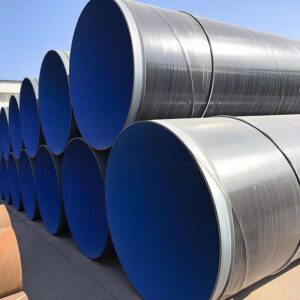
TPEP generally refers to steel pipes with polyethylene-based corrosion protection systems applied to both the internal and external surfaces.
Different manufacturers and projects may use different coating structures. Therefore, the following requirements should be clearly specified during procurement:
- Specific materials used for the internal and external coatings
- Internal and external coating thicknesses
- Surface preparation requirements
- Coating adhesion requirements
- Holiday detection requirements
- Applicable standards and acceptance methods
The specific corrosion protection performance of a TPEP-coated steel pipe should not be judged solely by the product name.
ii. Internal Corrosion Protection
During wastewater transmission, the internal surfaces of pipelines may be affected by the chemical composition of the wastewater, corrosive gases, and suspended particles.
Common internal corrosion protection methods include:
1. Liquid Epoxy Coating
- Liquid epoxy coatings can be used on the internal surfaces of wastewater or water transmission pipelines, depending on the coating’s performance characteristics and project requirements.
- When selecting a liquid epoxy coating, its compatibility with the actual conveyed medium, operating temperature, and service conditions should be confirmed.
2. Fusion-Bonded Epoxy (FBE) Internal Coating
- FBE coatings can also be applied to the internal surfaces of steel pipes. However, it is essential to confirm that the selected coating system is suitable for internal application and the actual service environment.
3. Other Internal Lining Systems
- For specific types of industrial wastewater, polyurethane or other chemically resistant lining materials may also be considered based on their compatibility with the conveyed medium.
iii. Corrosion protection considerations in different engineering environments
| Operating Environment | Key Corrosion Protection Considerations |
|---|---|
| Buried Municipal Drainage Pipelines | Soil corrosion, groundwater conditions, and damage to external coatings |
| Pressurized Sewage Transmission Pipelines | Internal wastewater corrosion and external soil corrosion |
| Stormwater Transmission Pipelines | Water quality, sediment, external environmental conditions, and operating mode |
| Industrial Wastewater Pipelines | Chemical compatibility, temperature, and abrasion |
| Internal Pipelines at Sewage Treatment Plants | Specific operating conditions associated with different treatment processes and pipeline locations |
iv. Special Consideration: Hydrogen Sulfide (H₂S) Corrosion
Hydrogen sulfide (H₂S) may be generated in some wastewater collection and treatment systems.
Under oxygen-deficient conditions, sulfur-containing substances in wastewater may produce hydrogen sulfide through biochemical processes. When hydrogen sulfide enters the gas space in the upper part of a pipeline, it may form sulfuric acid on moist surfaces, potentially causing corrosion of concrete or metal pipelines.
Particular attention should be paid to the following locations:
- Wet wells at wastewater pumping stations
- Discharge points of pressurized sewage pipelines
- Pipeline sections where wastewater has a long retention time
- Pipeline areas prone to anaerobic conditions
- Areas within wastewater treatment facilities exposed to corrosive gases
For these locations, project engineers should assess the corrosive environment and determine suitable steel pipe materials and internal protection systems.
It should not be assumed that corrosion protection coatings commonly used for standard water supply pipelines are necessarily suitable for wastewater environments containing hydrogen sulfide.
VI. Steel Pipe Manufacturing and Quality Inspection
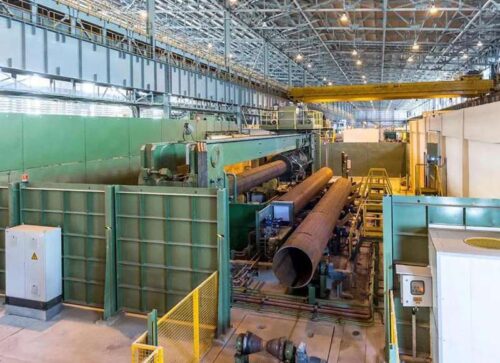
Quality requirements for steel pipes used in drainage and wastewater treatment projects cover not only dimensions and material properties but also weld quality, corrosion protection quality, and the relevant inspection documentation.
Buyers should clearly specify the inspection items, testing frequency, acceptance criteria, and documentation requirements in the purchase contract or technical agreement.
i. Raw Material Inspection
Raw material inspection mainly includes:
- Material certificates for steel plates or steel coils
- Steel grade and applicable standards
- Chemical composition
- Mechanical properties
- Raw material batch information
For projects with traceability requirements, a clear link should be established between raw material batches and finished steel pipes.
For example, production records, raw material identification numbers, and pipe identification numbers can be used to link each finished pipe to the specific raw material batch used in its production.
This allows the raw materials used for each steel pipe and their corresponding inspection records to be identified during subsequent quality traceability.
ii. In-Process Inspection During Steel Pipe Manufacturing
Depending on the type of steel pipe and the applicable standards, the following inspections may be carried out during the manufacturing process:
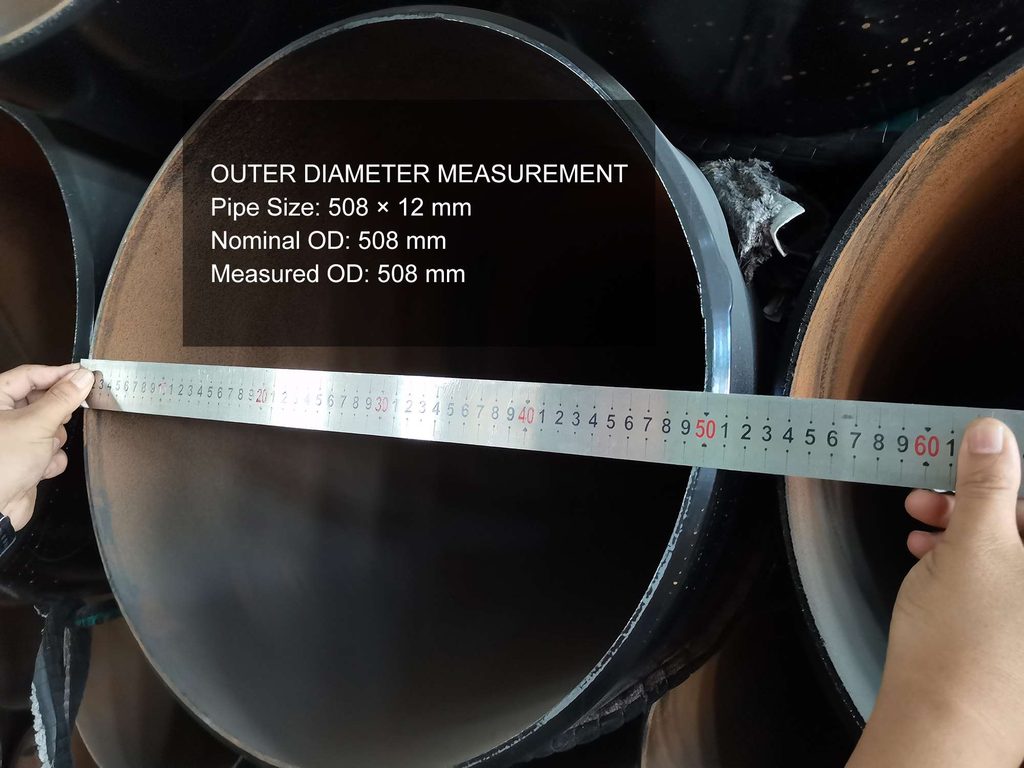
- Outside diameter measurement
- Wall thickness measurement
- Length measurement
- Pipe end and bevel inspection
- Visual inspection of weld seams
- Non-destructive testing (NDT) of weld seams
- Straightness and roundness inspection
- Hydrostatic testing, if required by the applicable standards or project specifications
Weld seam non-destructive testing may include:
- UT (Ultrasonic Testing)
- RT (Radiographic Testing)
- Other non-destructive testing methods specified by the project
It is important to note that NDT requirements vary depending on the applicable steel pipe standards and individual project specifications. Not all steel pipes are required to undergo the same testing methods, and the testing percentage specified for one project should not be treated as a universal requirement for all projects.
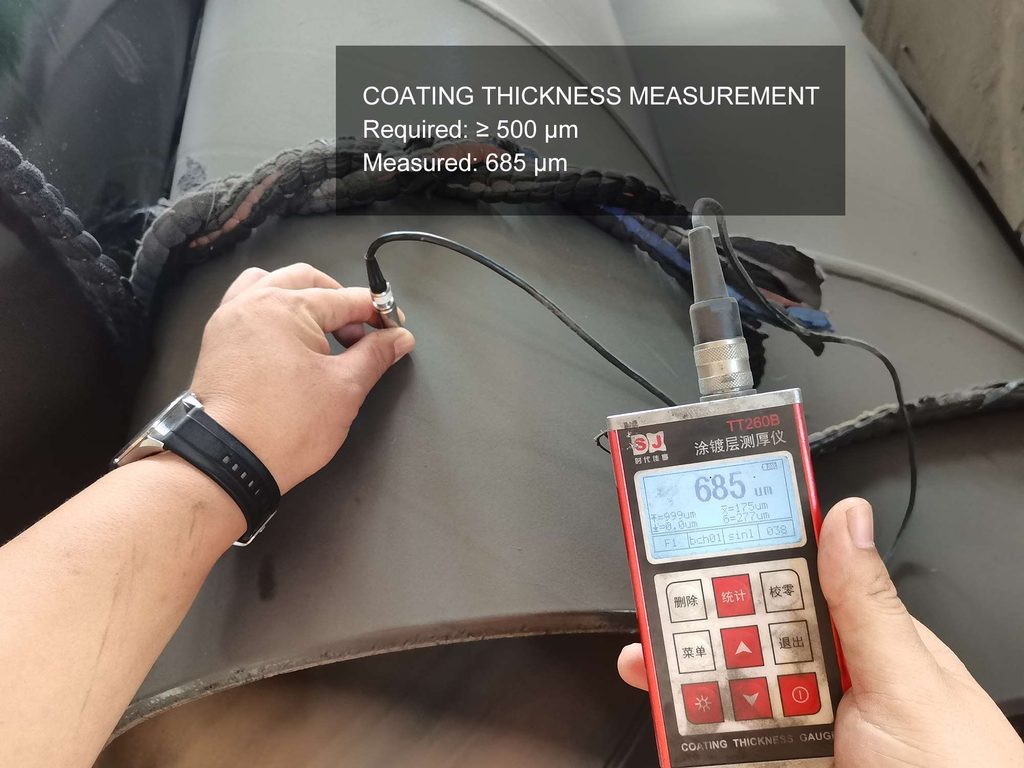
iii. Corrosion Protection Quality Inspection
For coated steel pipes, inspection should cover not only the steel pipe itself but also the quality of the coating system.
Common inspection items include:
- Surface preparation inspection
- Surface cleanliness and roughness inspection
- Coating thickness measurement
- Holiday detection
- Adhesion testing, if required by the project
- Visual inspection of the coating
- Quality inspection after coating repairs
Holiday detection is primarily used to identify pinholes, missed coating areas, and other discontinuities in the insulating coating.
The test voltage should be determined based on the coating material, coating thickness, and applicable standards. Excessively high test voltage may damage the coating.
iv. Final Inspection and Quality Documentation
After steel pipe production is completed, the buyer may verify the following quality documents in accordance with the contract requirements:
| Document Name | Main Purpose |
|---|---|
| MTC (Mill Test Certificate) | Certifies the material properties of raw materials and finished products |
| Raw Material Inspection Records | Document the inspection results of steel plates or steel coils |
| Dimensional Inspection Report | Confirms that dimensions such as outside diameter, wall thickness, and length meet the specified requirements |
| Non-Destructive Testing (NDT) Report | Records the results of weld seam non-destructive testing |
| Hydrostatic Test Report | Documents the results of the specified hydrostatic testing |
| Coating Inspection Report | Records inspection results, including coating thickness measurements and holiday detection |
| Final Inspection Report | Summarizes finished product inspection results and acceptance status |
| Packing List | Specifies the dimensions, quantities, and packaging details of the products being delivered |
The actual documents required should be determined in accordance with the purchase contract and project technical specifications.
Complete quality documentation helps buyers verify whether the steel pipes comply with contractual requirements and facilitates subsequent project acceptance and quality traceability.
VII. Frequently Asked Questions About Steel Pipes for Drainage and Wastewater Treatment
1. Which type of steel pipe is suitable for municipal drainage projects?
- The selection should be based on the pipe diameter, design flow rate, operating pressure, burial conditions, and construction methods.
- For large-diameter transmission and pressurized drainage projects, SSAW or LSAW steel pipes may be considered. For small- and medium-diameter pipelines, ERW or seamless steel pipes may also be suitable, depending on the required dimensions and technical specifications.
- Not all municipal drainage networks need to use steel pipes.
2. Can spiral steel pipes be used for wastewater transmission?
- Yes. However, their suitability should be determined based on the wastewater characteristics, operating pressure, steel pipe specifications, and project design requirements.
- If the wastewater is corrosive, suitable internal and external corrosion protection systems must also be selected.
3. What type of corrosion protection should be used for buried drainage steel pipes?
- Common external corrosion protection systems include 3PE, FBE, and TPEP coatings.
- The specific system should be selected based on soil corrosivity, groundwater conditions, the project’s design service life, and applicable standards.
- If the wastewater is corrosive, internal corrosion protection must also be considered separately.
4. How should the wall thickness of drainage steel pipes be selected?
- Wall thickness should be determined through calculations based on the pipe outside diameter, operating pressure, external loads, burial depth, material properties, and applicable design standards.
- Pressurized pipelines and gravity-flow drainage pipelines have different design conditions. Wall thickness cannot be determined solely by pipe diameter.
5. What is the difference between 3PE-coated and FBE-coated steel pipes?
- 3PE typically consists of three layers: an epoxy primer, an adhesive intermediate layer, and an outer polyethylene layer. It is mainly used for external corrosion protection of steel pipes.
- FBE uses fusion-bonded epoxy powder to form a protective coating. Depending on the coating system, it can be applied to either the external or internal surface of steel pipes.
- The two systems differ in coating structure, application methods, and performance characteristics. The appropriate system should be selected according to project requirements.
6. What documents should suppliers provide when purchasing drainage steel pipes?
- Depending on the contract requirements, suppliers are generally expected to provide a Mill Test Certificate (MTC), dimensional inspection reports, weld seam NDT reports, coating inspection reports, and final inspection documents.
- The specific documents required and the extent of testing should be clearly defined in the purchase contract or technical agreement.