I. Main Applications of Industrial Piping Systems
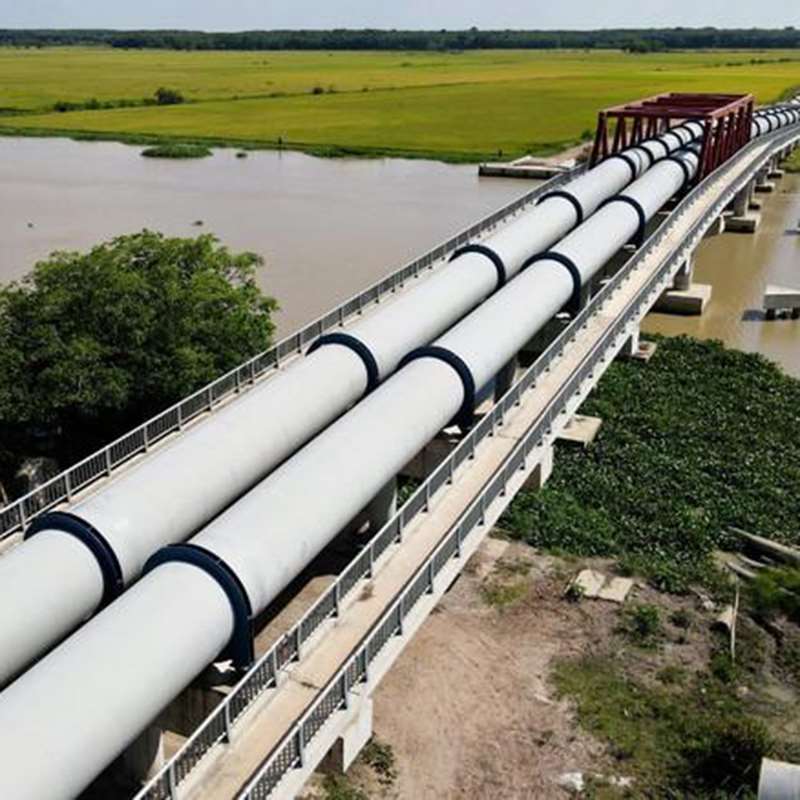
Industrial piping systems are primarily used to transport fluids within factories and between industrial facilities. They connect production equipment, storage tanks, processing units, and auxiliary facilities. Depending on the purpose of transportation and the location of use, industrial piping systems can be divided into the following main categories.
i. Industrial Fluid Transportation
Used to transport liquid raw materials required for production, industrial water, and other fluid media. Typical applications include pipelines connecting storage tanks to production equipment and liquid transfer pipelines between different production areas.
The material and specifications of these pipelines should be selected based on the chemical properties of the conveyed medium, the required flow rate, and the operating pressure.
ii. Plant Piping Systems
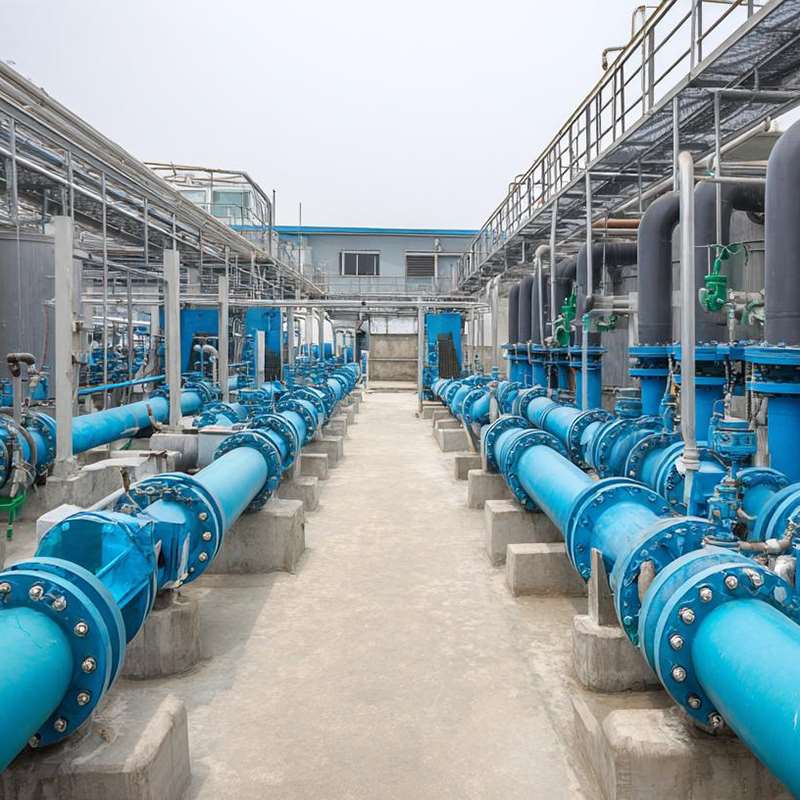
Plant piping systems are typically installed in production workshops, equipment areas, and utility facilities throughout an industrial plant. Their main functions include:
- Connecting pumps, storage tanks, filtration equipment, and production units.
- Transporting liquids and gases required for production.
- Supplying auxiliary fluids and gases to different production units.
- Connecting external utility networks to internal plant piping systems.
These piping systems often involve various pipe diameters, different operating pressures, and complex connection arrangements. Their design must take into account equipment layout and production processes.
iii. Process Water Pipelines
Process water is an essential resource in many industrial production processes. Common applications include:
- Water supply to production equipment.
- Industrial circulating cooling water systems.
- Water for equipment cleaning.
- Water used in manufacturing processes.
- Piping connections to water treatment equipment.
The internal pipe protection system should be selected based on water quality, temperature, and circulation conditions. For water systems operating in continuous circulation over long periods, attention should also be paid to the effects of scaling, sediment buildup, and microbial growth on pipeline performance.
iv. Other Industrial Piping Applications
In addition to the applications mentioned above, steel pipes are also used in various industrial facilities, including:
- Auxiliary water supply and circulating water systems in power plants.
- Water supply and drainage systems for mining operations.
- Utility pipeline networks in industrial parks.
- Auxiliary fluid and gas transportation in manufacturing plants.
- Industrial wastewater collection and transportation systems.
Piping requirements vary depending on the application. Steel pipe specifications should not be determined solely by the industry in which they are used. The specific properties of the conveyed medium and actual operating conditions must also be taken into consideration.
II. Key Factors to Consider in Industrial Piping Design
i. Characteristics of the Conveyed Medium
| Conveyed Medium | Key Considerations |
|---|---|
| General Industrial Water | Water quality, corrosivity, and scaling |
| Circulating Cooling Water | Water quality, sediment buildup, corrosion, and temperature |
| Oil-Based Fluids | Chemical compatibility, temperature, and sealing performance |
| Compressed Air | Operating pressure, moisture content, and pipeline cleanliness |
| Chemical Liquids | Chemical composition, concentration, and corrosivity |
| Fluids Containing Solid Particles | Particle hardness, concentration, flow velocity, and abrasion |
For general industrial water supply pipelines, suitable carbon steel pipes and corrosion protection systems can be selected based on water quality and environmental conditions. However, when transporting highly corrosive chemical liquids, stainless steel, alloy materials, or specialized internal linings may be required.
ii. Flow Rate and Pipe Diameter
The pipe diameter directly affects the fluid-carrying capacity of a pipeline and the pressure loss within the system. If the pipe diameter is too small, the flow velocity may become too high, resulting in increased pressure loss and potentially preventing the system from meeting the water supply or fluid transportation requirements of the equipment. On the other hand, an excessively large pipe diameter may increase the costs of steel pipe procurement, installation, and support structures.
When determining the appropriate pipe diameter, the following factors should generally be considered:
- Design Flow Rate: The volume of fluid that the pipeline needs to transport per hour.
- Fluid Flow Velocity: An appropriate flow velocity range should be determined based on the properties of the fluid and the intended application of the pipeline.
- Pipeline Length: The longer the pipeline, the greater the attention that needs to be paid to frictional pressure losses along its length.
- Pipeline Layout: Fittings such as elbows, valves, and tees contribute to additional local pressure losses.
- Equipment Requirements: Pumps, heat exchangers, and other equipment have specific flow rate and pressure requirements.
In practical engineering applications, the pipe diameter is initially determined based on the design flow rate and allowable flow velocity. It should then be verified through pressure loss calculations and an assessment of the equipment’s operating conditions.
iii. Operating Pressure and Temperature
Operating pressure and temperature directly affect material selection and pipe wall thickness.
During engineering design, the following parameters should be clearly defined:
- Normal Operating Pressure: The pressure under normal operating conditions.
- Design Pressure: The pressure used as the basis for pipeline design.
- Maximum and Minimum Design Temperatures: The highest and lowest temperatures the pipeline is designed to withstand.
- Pressure Fluctuations or Water Hammer: Whether the system is subject to pressure fluctuations or water hammer effects.
- Frequent Start-ups and Shutdowns and Temperature Changes: Whether the pipeline is exposed to frequent start-up and shutdown cycles or temperature variations.
Pipe wall thickness should not be determined solely based on operating pressure or past experience. Other factors must also be considered, including the allowable stress of the material at the design temperature, weld joint efficiency, corrosion allowance, and applicable design codes and standards.
For high-temperature and high-pressure process pipelines, the necessary calculations and material selection should be carried out by qualified engineering design personnel.
iv. Installation Environment
The installation environment affects the corrosion protection, connection, and support requirements of steel pipes.
| Installation Environment | Key Considerations |
|---|---|
| Aboveground – Indoor | Humidity, mechanical damage, maintenance access |
| Aboveground – Outdoor | Rainwater, UV exposure, atmospheric corrosion |
| Underground – Buried | Soil corrosion, groundwater, external corrosion protection |
| High-Temperature Areas | Thermal expansion, insulation, support requirements |
| Near Vibrating Equipment | Pipeline vibration, connection stress, support structures |
For example, underground industrial water transmission pipelines require particular attention to external corrosion protection and field joint protection, while pipelines installed near high-temperature equipment need to account for thermal displacement and support design.
III. How to Select the Right Steel Pipe
Once the pipeline operating conditions have been clearly defined, the appropriate steel pipe manufacturing process can be selected based on the pipe diameter, wall thickness, pressure requirements, manufacturing standards, and project specifications.
i. Spiral Submerged Arc Welded Steel Pipe (SSAW Steel Pipe)
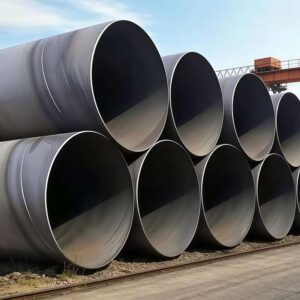
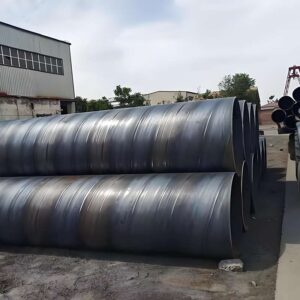
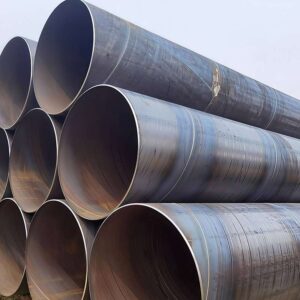
SSAW steel pipes are manufactured by forming steel strips into a spiral shape and joining them through a helical weld seam.
Their main characteristics include flexible size production and suitability for manufacturing large-diameter steel pipes.
Common Applications:
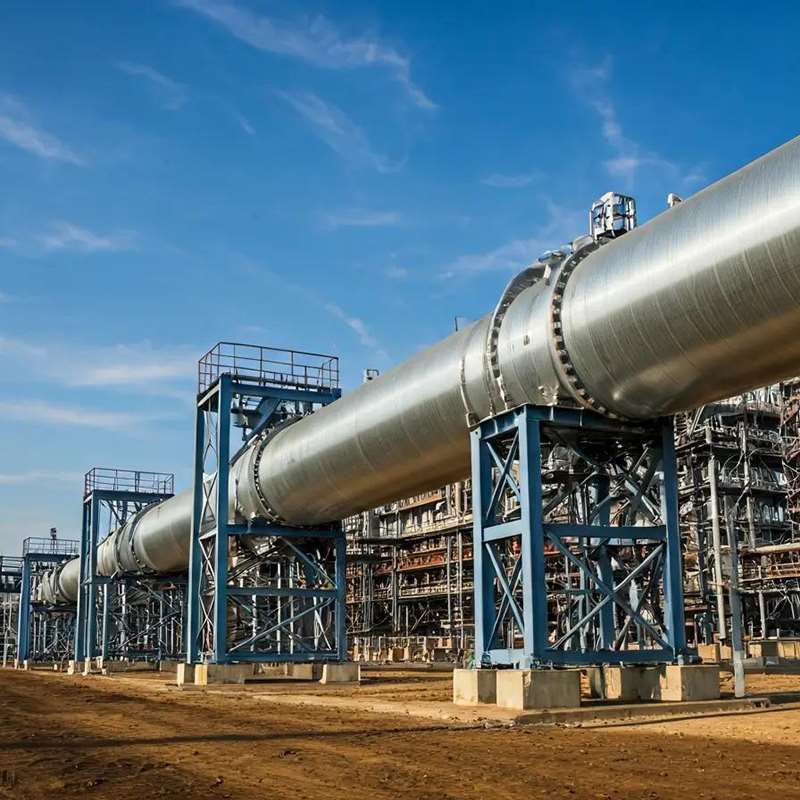
- Large-diameter industrial water transmission pipelines.
- Industrial circulating cooling water pipelines in factories.
- Water transmission networks in industrial parks.
- Certain industrial fluid transmission pipelines that meet the applicable design requirements.
When selecting SSAW steel pipes, it is important to confirm that the outside diameter, wall thickness, steel grade, weld quality, and inspection requirements meet the applicable project standards.
ii. Longitudinal Submerged Arc Welded Steel Pipe (LSAW Steel Pipe)
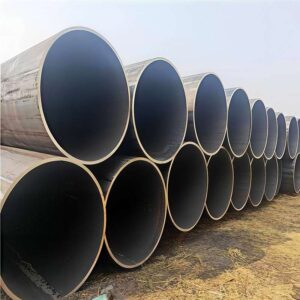
LSAW steel pipes are manufactured by forming steel plates into a tubular shape and joining the pipe body with a longitudinal weld seam.
The applicable diameter and wall thickness ranges depend on the specific manufacturing process and equipment capabilities.
Common Applications Include:
- Large-diameter industrial transmission pipelines.
- Industrial pipelines with specific dimensional and wall thickness requirements.
- Certain industrial fluid transmission projects with demanding technical requirements.
When selecting LSAW steel pipes, particular attention should be paid to verifying the manufacturing standards, material properties, weld inspection requirements, and project technical specifications.
iii. Electric Resistance Welded Steel Pipe (ERW Steel Pipe)
ERW steel pipes are manufactured by forming steel strips into a tubular shape and joining the edges with a longitudinal seam using high-frequency electric resistance welding.
Common Applications Include:
- Auxiliary piping systems in factories.
- Small- and medium-diameter industrial water supply pipelines.
- Low-pressure or other industrial transmission pipelines that meet the applicable product standard requirements.
When selecting ERW steel pipes, the pipe dimensions, material grade, weld quality, and applicable pressure conditions should be verified against the relevant product standards.
iv. Seamless Steel Pipe
Seamless steel pipes are manufactured through processes such as piercing and rolling. The pipe body has no longitudinal weld seam.
Common Applications Include:
- Equipment connection piping.
- Small- and medium-diameter industrial process pipelines.
- High-temperature or high-pressure pipelines that comply with the relevant standards.
Seamless steel pipes are not automatically suitable for all high-pressure operating conditions. Their suitability must still be verified based on the material grade, wall thickness, design temperature, and operating pressure.
Selection Principle: Seamless steel pipes should not simply be considered superior to welded steel pipes, nor should any single welding process be assumed suitable for all industrial pipelines. The final selection should always be based on the actual design conditions and applicable standards.
IV. Steel Pipe Materials and Corrosion Protection
i. Common Steel Grades
Commonly used materials for industrial pipeline projects include:
| Material Grade | Common Standard System | Main Characteristics |
|---|---|---|
| Q235B | GB/T Standards | Commonly used for general carbon steel structural and piping products where applicable requirements are met |
| Q355B | GB/T Standards | Higher-strength carbon structural steel |
| Grade B | API 5L | Pipeline steel grade |
| X42 / X52 | API 5L | Pipeline steel grades |
It is important to note that materials specified under different standard systems should not be considered interchangeable based solely on their strength values. Their chemical composition, mechanical properties, impact requirements, and applicable project standards must also be verified.
ii. Internal and External Corrosion Protection
Corrosion protection for industrial pipelines is generally divided into internal and external corrosion protection.
Internal Corrosion Protection:
Primarily used to reduce corrosion, scaling, and other adverse effects caused by the conveyed fluid on the internal surface of steel pipes.
Common options include:
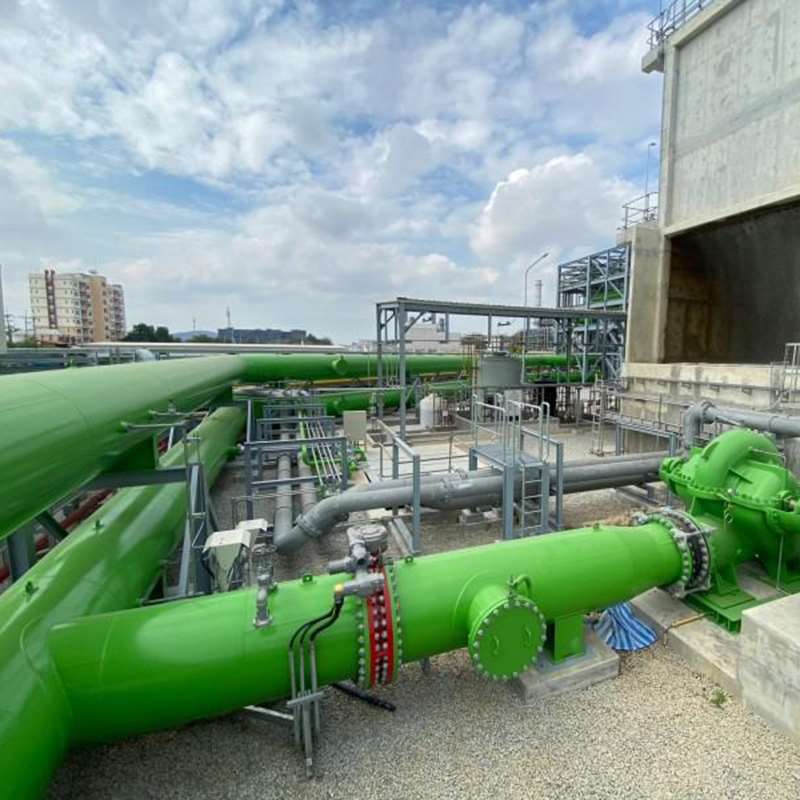
- FBE internal coating.
- Epoxy resin coating.
- TPEP internal corrosion protection system.
- Other lining materials selected according to the properties of the conveyed medium.
External Corrosion Protection:
Primarily used to protect the external surface of steel pipes and reduce corrosion caused by environmental exposure.
Common options include:
- 3PE coating.
- FBE external coating.
- TPEP corrosion protection system.
- Other suitable industrial protective coatings.
V. Technical Specifications and Quality Inspection for Industrial Pipelines
When purchasing steel pipes, it is important to clarify not only the product specifications but also the manufacturing, inspection, and acceptance requirements.
i. Pipe Dimensions and Specifications
The following parameters should be confirmed:
- Outside Diameter (OD)
- Wall Thickness (WT)
- Pipe Length
- Dimensional Tolerances
- End Preparation
The outside diameter and wall thickness must comply with the design requirements and applicable product standards. End preparation should be compatible with the connection method used at the installation site.
ii. Welding Quality and Non-Destructive Testing (NDT)
For welded steel pipes, particular attention should be paid to weld quality and inspection requirements.
Common inspection methods include:
- UT (Ultrasonic Testing): Used to detect internal defects through ultrasonic waves.
- RT (Radiographic Testing): Used to detect internal defects through radiographic examination.
- MT (Magnetic Particle Testing): Used to detect surface and near-surface defects in ferromagnetic materials.
- PT (Penetrant Testing): Used to detect surface-breaking defects.
Different inspection methods are suitable for different types of defects and inspection locations. Project specifications should clearly define the inspection scope, testing percentage, acceptance criteria, and applicable standards, rather than simply stating “100% inspection” without specifying the inspection method and acceptance requirements.
iii. Hydrostatic Testing and Coating Inspection
Depending on the applicable product standards and project requirements, steel pipes may need to undergo hydrostatic testing to verify their pressure resistance and leak-tightness.
Coated steel pipes also require relevant inspections, including:
- Coating Thickness Measurement.
- Visual Inspection of the Coating Surface.
- Holiday Detection (where applicable).
- Adhesion Testing or Other Performance Tests, as required by the coating standards and project specifications.
- Inspection of Uncoated Pipe-End Areas and Coating Integrity.
The specific inspection items and acceptance requirements should be clearly defined in the procurement technical documentation.
iv. Quality Documentation
When purchasing steel pipes, the following documents should generally be confirmed according to project requirements:
- MTC (Material Test Certificate): Certifies the material quality and test results.
- Inspection Report: Records the inspection results.
- NDT Report: Non-Destructive Testing Report.
- Hydrostatic Test Report: Records the hydrostatic test results (where applicable).
- Coating Inspection Report: Records the coating inspection results.
- Packing List: Details the packaged goods and their quantities.
These documents should correspond to the actual steel pipe specifications, material batches, and inspection records of the delivered products to facilitate project acceptance and quality traceability.
VI. Practical Checklist Before Purchasing Industrial Steel Pipes
Before submitting a formal inquiry, procurement personnel are advised to confirm the following information with the engineering department to avoid quotation discrepancies or products that do not meet the project requirements due to unclear technical specifications.
| Items to Confirm | Requirements to Clarify Before Purchasing |
|---|---|
| Product Application | Conveyed medium and specific application |
| Operating Conditions | Design pressure, temperature, and flow rate |
| Pipe Specifications | Outside diameter, wall thickness, and length |
| Material Grade | Specific steel grade and applicable standard |
| Manufacturing Process | SSAW, LSAW, ERW, or seamless |
| Product Standards | Steel pipe manufacturing and inspection standards |
| Corrosion Protection Requirements | Internal and external coating types and thicknesses |
| Pipe End Requirements | Plain ends, beveled ends, and other end preparation requirements |
| Inspection Requirements | Non-destructive testing (NDT), hydrostatic testing, and acceptance criteria |
| Quality Documentation | MTC and relevant inspection reports |
| Delivery Requirements | Quantity, packaging, transportation, and delivery schedule |
During the procurement process, particular attention should also be paid to the following three points:
1. Technical Specifications Must Match the Design Requirements.
- Providing only the outside diameter and wall thickness is not sufficient. The material grade, product standard, and relevant inspection requirements must also be confirmed.
2. Corrosion Protection Requirements Must Be Clearly Defined.
- Simply specifying 3PE, FBE, or TPEP is not enough. The coating structure, thickness, applicable operating temperature, and acceptance criteria should also be clearly specified.
3. Confirm Delivery and Installation Conditions in Advance.
- Pipe length, end preparation, packaging methods, and transportation restrictions can all affect installation efficiency on site. These requirements should therefore be confirmed before placing the order.