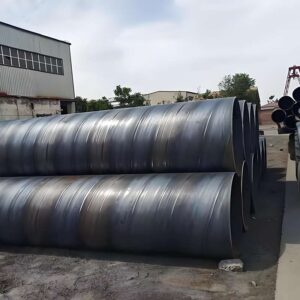
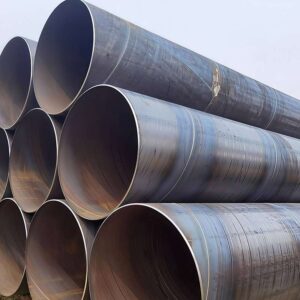
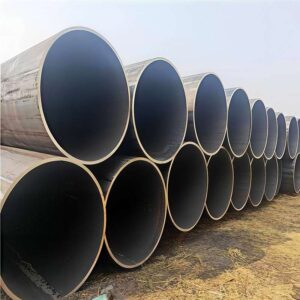
I. Overview of Structural Steel Pipe Applications
Steel pipes are widely used as structural materials in modern buildings, industrial facilities, and mechanical equipment. Thanks to their closed cross-sectional shape, good overall stability, and relatively balanced structural performance in different directions, circular steel pipes are commonly used in structural columns, bracing members, equipment frames, industrial platforms, construction support systems, and other engineering applications.
Unlike steel pipes used for fluid transportation, structural steel pipes are primarily designed to carry loads, provide support, connect structural components, and transfer forces. Engineers need to select the appropriate pipe dimensions, material grades, and manufacturing processes based on actual loading conditions. Suitability should not be determined solely by pipe diameter or wall thickness.
Structural steel pipe applications mainly fall into the following four categories:
- Steel Structures: Used for building columns, beams, space frames, and other load-bearing structural members.
- Construction Support Systems: Used in scaffolding, temporary supports, and formwork support systems.
- Industrial Structures: Used for equipment supports, pipe racks, industrial platforms, and factory building structures.
- Mechanical Structures: Used for machinery frames, equipment bases, and load-bearing components.
II. Main Applications of Steel Pipes in Structural Engineering
i. Steel Structures
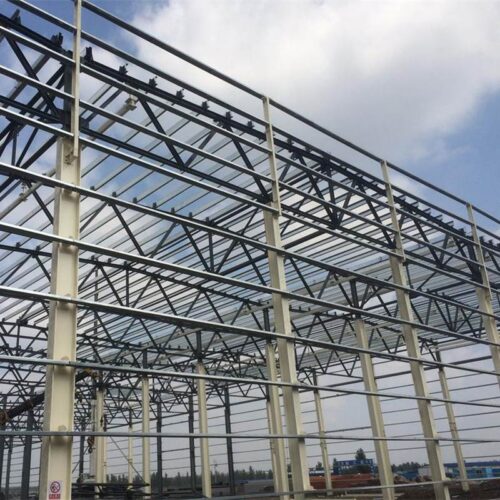
Steel pipes are commonly used as structural components in steel construction, particularly in projects that require high load-bearing capacity, spatial stability, and specialized structural configurations.
1. Building Steel Structures
- In industrial buildings, commercial buildings, sports stadiums, and large public buildings, steel pipes can be used as structural columns, bracing members, and certain truss components.
- Steel columns are commonly used to transfer loads from the superstructure down to the foundation. In large-span buildings, steel pipes can also form part of space trusses and roof support systems.
2. Space Frame Structures
- Large buildings such as sports stadiums, exhibition centers, and airport terminals often use space frame structures.
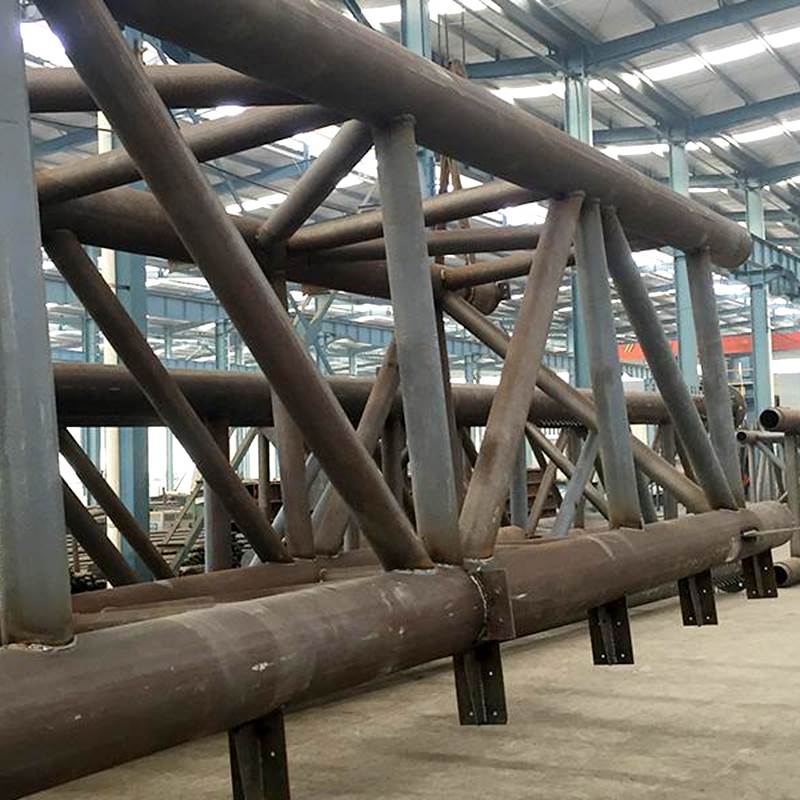
- Circular steel pipes can serve as members within these structures, connected through joints to form a three-dimensional load-bearing system. This structural arrangement distributes loads among multiple members and is suitable for roof systems with large spans.
3. Steel Pipe Bracing Members
- In steel-framed buildings, steel pipes can also be used as diagonal bracing, horizontal bracing, and other structural stabilization members.
- These members are primarily designed to improve overall structural stiffness and limit lateral displacement under horizontal loads.
Key Considerations for Structural Design:
- Determine the pipe cross-sectional dimensions and wall thickness based on the applied loads.
- Consider the slenderness ratio and overall stability of steel columns.
- Select appropriate joints and welded connection methods according to the structural configuration.
- Determine whether corrosion protection is required based on the service environment.
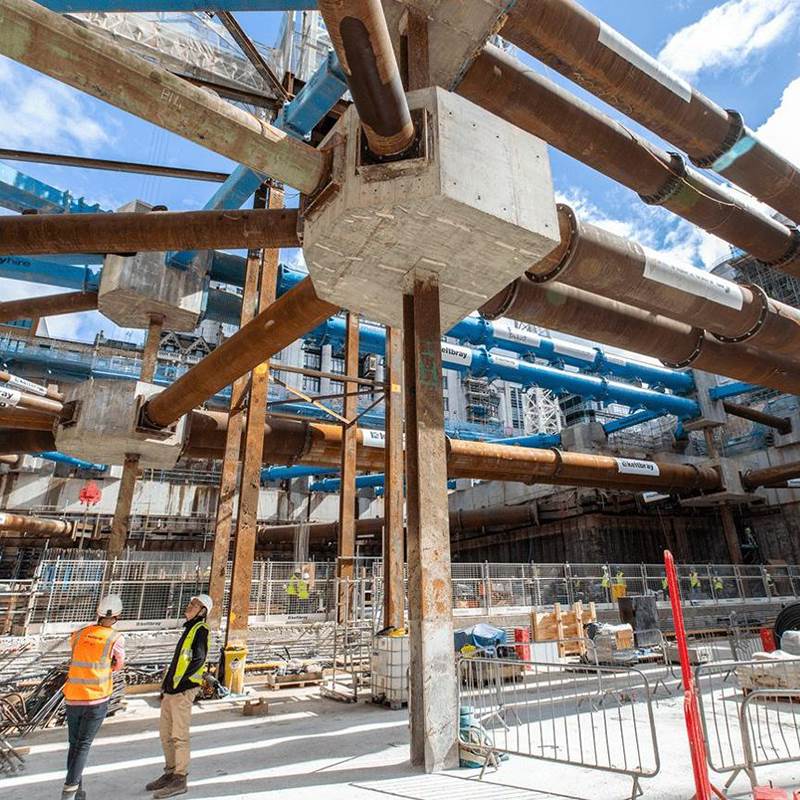
ii. Construction Support Systems
Steel pipes are also widely used in temporary support systems during building construction. These structures are generally not permanent parts of the building. Instead, they are designed to carry temporary loads during construction and ensure stability and safety throughout the construction process.
1. Scaffolding Systems
- Steel pipe scaffolding is used in building construction, exterior wall work, equipment installation, maintenance, and other applications. It provides working platforms for construction personnel and equipment.
- Steel pipes must have the strength and dimensional accuracy required by the design, while ensuring that couplers and other connection devices function reliably.
2. Formwork Support Systems
- In concrete construction, formwork support systems must withstand the loads imposed by the formwork, reinforcing steel, concrete, construction workers, and equipment.
- Steel pipe support members should be designed according to the support height, spacing, applied loads, and foundation conditions.
3. Temporary Structural Supports
- Temporary steel pipe supports are often required during bridge construction, building renovation, excavation projects, and the installation of large equipment.
- These support structures are designed to carry temporary loads during construction and prevent structural members from undergoing excessive deformation or becoming unstable.
Key Considerations for Construction Support Systems:
- The outside diameter and wall thickness of support pipes must meet the design requirements.
- Consider the length, slenderness ratio, and stability of support members.
- Check connections, joints, and the load-bearing capacity of the supporting foundation.
- Inspect reused steel pipes for deformation, cracks, and corrosion.
It is important to note that the safety of temporary support systems depends not only on the steel pipes themselves but also on support spacing, connection methods, overall structural arrangement, and construction management.
iii. Industrial Structures
In industrial facilities, steel pipes are commonly used for equipment supports, pipe supports, industrial platforms, and factory building structures.
Compared with conventional building structures, industrial structures typically need to account for specific operating conditions, including equipment weight, operational vibration, temperature variations, corrosive environments, and equipment maintenance requirements.
1. Industrial Plant Structures
- Steel pipes can be used for load-bearing columns, bracing members, and auxiliary structures in industrial plants, providing support for production equipment, roof systems, and other facilities.
2. Pipe Racks and Pipe Supports
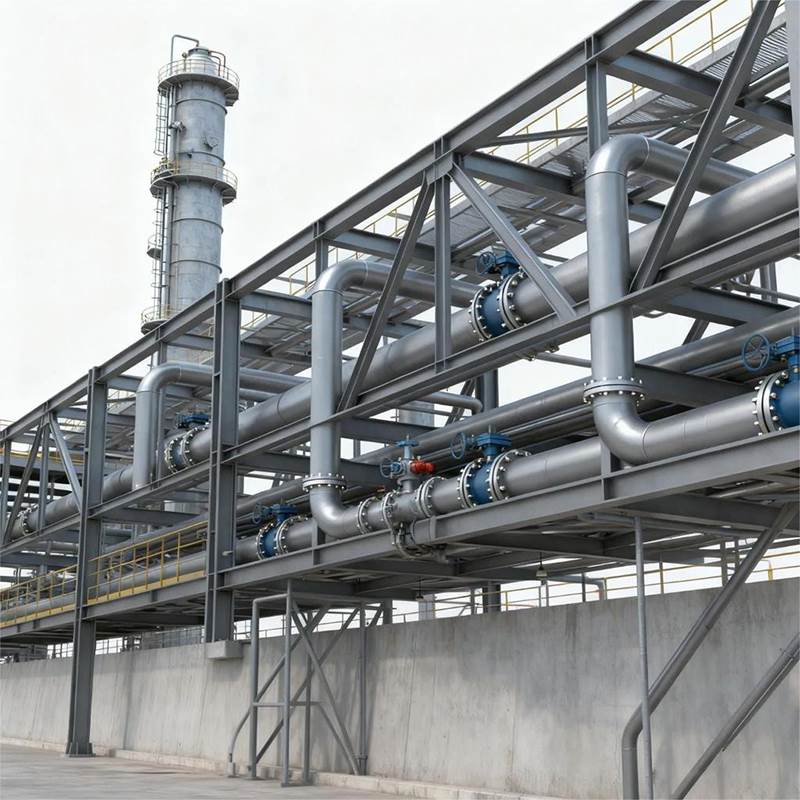
- In chemical plants, power plants, industrial parks, and large-scale manufacturing facilities, pipe racks are used to support and route process pipelines serving different purposes.
- Steel pipes can be used as pipe rack columns, bracing members, and components of structural frames.
- It is important to distinguish between steel pipes used in pipe rack structures and process pipelines that carry fluids or other media. These serve different purposes and may be subject to different design requirements and acceptance standards.
3. Industrial Platforms and Walkways
- Industrial platforms provide access for equipment operation, maintenance, and personnel movement. Steel pipes can be used for platform support columns, guardrail posts, and related structural components.
4. Power Plant and Energy Facility Structures
- In power plants and energy projects, steel pipes can be used for equipment supports, auxiliary structures, pipe supports, and other load-bearing components.
Key Considerations for Industrial Structures:
- Equipment weight and dynamic loads generated during operation.
- Corrosion risks caused by high temperatures, humidity, and chemical substances.
- Steel pipe connection methods and on-site welding requirements.
- Space requirements for future maintenance and inspection.
For structural steel pipes used in outdoor industrial facilities or corrosive environments, an appropriate corrosion protection system should be selected based on the actual service conditions.
III. How to Select the Right Steel Pipe for Structural Engineering
i. Selection Based on Load and Structural Requirements
The first step is to understand the role of the steel pipe within the structure.
Common types of loading include:
| Type of Load | Description |
|---|---|
| Axial Compression | A compressive force applied along the longitudinal axis of the steel pipe. |
| Axial Tension | A tensile force applied along the longitudinal axis of the steel pipe. |
| Bending Load | A load that causes the steel pipe to bend or deform. |
| Shear Load | A load that tends to cause relative sliding between adjacent sections of a structural member. |
| Combined Loading | Two or more types of loads acting simultaneously. |
For example:
- Steel Columns: Typically require consideration of axial compression, bending moments, and overall structural stability.
- Bracing Members: Need to be designed to withstand tensile or compressive forces, as well as the forces acting on their connections.
- Industrial Equipment Supports: Must account for equipment weight, operational vibration, and dynamic loads.
- Space Frame Members: Their loading requirements should be determined based on joint connections and the analysis of the overall structural system.
For steel pipe members under compression, particular attention should also be paid to the slenderness ratio, overall buckling, and local buckling.
Therefore, steel pipe selection must be based on structural calculations and engineering design requirements.
ii. Selection Based on Outside Diameter and Wall Thickness
1. Outside Diameter (OD)
- The outside diameter affects the cross-sectional dimensions and second moment of area of a steel pipe. Under otherwise identical conditions, an appropriate increase in outside diameter can significantly improve the bending performance and stability of a structural member.
2. Wall Thickness (WT)
- Wall thickness affects the cross-sectional area, load-bearing capacity, and local stability of a steel pipe.
- For steel pipes subjected to compression or bending loads, additional checks may be required to verify compliance with relevant width-to-thickness ratio or diameter-to-thickness ratio requirements.
- When selecting steel pipes, it should not be assumed that a larger outside diameter or thicker wall is always the better choice. Structural weight, connection methods, fabrication complexity, and overall cost-effectiveness must also be taken into consideration.
iii. Selection Based on Steel Grade and Material Properties
The steel grade determines the key mechanical properties and applicable requirements of the base material used to manufacture the steel pipe.
The main material properties to consider include:
- Yield Strength: The stress level at which a material begins to undergo significant plastic deformation.
- Tensile Strength: The maximum stress a material can withstand during a tensile test.
- Elongation: Indicates the material’s ability to undergo plastic deformation.
- Impact Toughness: Reflects the material’s ability to resist fracture under impact loading.
- Weldability: Affects the welding procedures and quality when connecting steel pipes to other structural components.
Common steel grades include Q235B and Q355B.
Steel grade selection should be based on structural design calculations, applicable structural standards, service temperature, and welding requirements. Suitability should not be determined solely by the numerical designation in the steel grade.
iv. Selection based on manufacturing process
| Type of Steel Pipe | Key Characteristics | Typical Applications |
|---|---|---|
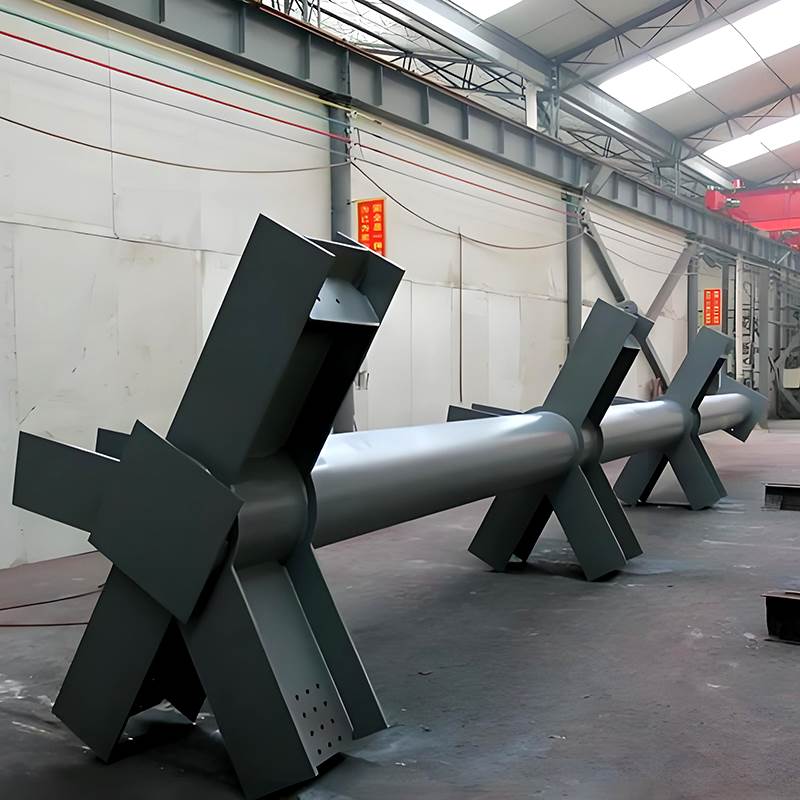
| Longitudinal Submerged Arc Welded Pipe (LSAW) | Features a longitudinal weld seam and can be manufactured in various sizes according to project requirements. | Large structural members, steel columns |
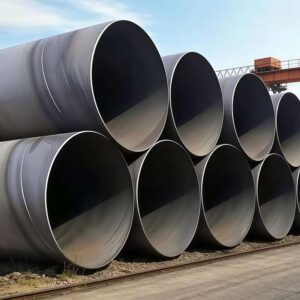
| Spiral Submerged Arc Welded Pipe (SSAW) | Features a spiral weld seam and is available in a wide range of sizes. | Large-diameter steel pipe structures, industrial supports |
| Seamless Steel Pipe | Manufactured without a welded seam in the pipe body. | Mechanical structures, equipment components |
When selecting a steel pipe for an actual project, the following factors should be carefully evaluated:
- Whether the required outside diameter and wall thickness can be manufactured.
- Whether the manufacturing standard complies with the project’s technical specifications.
- Whether the material properties meet the design requirements.
- Whether the weld seam or pipe body quality meets the applicable inspection requirements.
- Whether the supplier has the necessary manufacturing, testing, and delivery capabilities.
It is important to note that the manufacturing process alone does not determine the structural load-bearing capacity of a steel pipe. Its final performance also depends on the material properties, dimensions, manufacturing quality, and structural design.
v. Selection of Corrosion Protection Based on Service Environment
Steel pipes face different levels of corrosion risk depending on their service environments.
| Service Environment | Key Considerations |
|---|---|
| Indoor Dry Environments | Surface rust prevention and basic corrosion protection |
| Outdoor Environments | Rainfall, humidity, and UV exposure |
| Coastal Environments | Salt spray and marine atmospheric corrosion |
| Underground Environments | Soil corrosivity and groundwater conditions |
| Industrial Environments | Chemical exposure, temperature, and humidity |
For underground, coastal, and industrial environments where corrosion is a concern, an appropriate corrosion protection system should be selected based on the project requirements.
Consideration should also be given to coating repair requirements following welding, on-site cutting, and installation of the steel pipes.
IV. Technical Parameters to Confirm Before Purchasing Structural Steel Pipes
For engineering contractors and steel pipe procurement professionals, incomplete specification information is a common issue during the quotation and purchasing process.
Providing only the outside diameter and wall thickness is generally not sufficient to establish complete technical requirements for procurement.
It is recommended to clarify the following information before requesting a quotation.
i. Basic Dimensions and Material Specifications
| Parameter | Information to Be Confirmed |
|---|---|
| Type of Steel Pipe | Longitudinally welded, spiral welded, or seamless |
| Outside Diameter (OD) | Actual outside diameter of the steel pipe |
| Wall Thickness (WT) | Nominal wall thickness and allowable tolerances |
| Length | Individual pipe length and length tolerance |
| Steel Grade | Specific material grade |
| Manufacturing Standard | Applicable product manufacturing and acceptance standards |
| Dimensional Tolerances | Allowable tolerances for outside diameter, wall thickness, length, and other dimensions |
ii. Fabrication and Connection Requirements
After steel pipes arrive at the construction site, they may require further processing, such as cutting, beveling, welding, and installation.
The following requirements should be confirmed before purchasing:
- Pipe End Preparation: Plain ends, beveled ends, or other special end configurations.
- Bevel Angle and Root Face Requirements: Specify the required bevel angle and root face dimensions.
- Prefabricated Fittings: Confirm whether prefabricated connecting components are required.
- Mechanical Processing: Specify whether drilling, slotting, or other machining operations are required.
- Welding and Assembly Requirements: Clarify the applicable welding and assembly requirements.
If the project involves flange connections or other special connection types, the relevant drawings and dimensional requirements should also be provided in advance.
iii. Surface Preparation and Corrosion Protection Requirements
If steel pipes are intended for outdoor, underground, or corrosive environments, the following requirements should also be clearly specified:
- Surface Preparation Grade: The required level of surface preparation.
- Coating Type: The specified corrosion protection coating system.
- Coating Thickness: The required coating thickness.
- Internal and External Coating: Whether corrosion protection is required on both the internal and external surfaces.
- Uncoated Pipe-End Length: The required length of uncoated sections at the pipe ends.
- Coating Inspection and Repair Requirements: Applicable inspection procedures and coating repair requirements.
These specifications directly affect the steel pipe manufacturing process, production costs, and delivery lead time.
iv. Inspection and Quality Documentation Requirements
Engineering projects typically require relevant quality certificates and inspection documents.
The following documents should be confirmed during the procurement process:
- Material Test Certificate (MTC).
- Dimensional Inspection Records.
- Mechanical Test Reports.
- Weld Seam Non-Destructive Testing (NDT) Reports (where applicable).
- Coating Inspection Reports (where applicable).
- Third-Party Inspection Reports (when required by the contract).
These documents help the purchaser verify whether the steel pipes comply with the contractual requirements and project technical specifications.
V. Quality Inspection of Structural Steel Pipes
The quality of structural steel pipes depends not only on the raw materials but also on various stages of production, including forming, welding, dimensional control, and final inspection.
During procurement and acceptance, particular attention should be paid to the following aspects.
i. Visual and Dimensional Inspection
The main inspection items include:
- Whether the outside diameter of the steel pipe meets the specified requirements.
- Whether the wall thickness complies with the specified requirements.
- Whether the pipe length matches the purchase order.
- Whether the pipe body has any visible dents, deformation, or mechanical damage.
- Whether the pipe ends meet the specified end preparation requirements.
- Whether the steel pipe surface has any defects that could affect its intended use.
For large-diameter steel pipes, additional checks should be carried out for parameters such as ovality and straightness, in accordance with the applicable standards and project requirements.
ii. Material and Mechanical Property Testing
Material properties directly affect the safe performance of structural components in service.
Common inspection and testing items include:
- Chemical composition analysis.
- Tensile testing.
- Yield strength testing.
- Tensile strength testing.
- Elongation testing.
- Impact testing (where applicable).
The specific inspection and testing requirements should be determined based on the applicable product standard, material grade, and contractual requirements.
iii. Weld Seam Quality Inspection
For longitudinally welded and spiral welded steel pipes, weld seam quality is an important part of the inspection process.
Depending on the applicable standards and project requirements, the following non-destructive testing (NDT) methods may be used:
- Ultrasonic Testing (UT).
- Radiographic Testing (RT).
- Magnetic Particle Testing (MT).
- Penetrant Testing (PT).
Different testing methods are suitable for different types of defects and inspection areas. They should not be considered interchangeable.
iv. Corrosion Protection Coating Inspection
For steel pipes with corrosion protection coatings, the following items should also be inspected:
- Coating thickness.
- Surface appearance.
- Coating continuity.
- Adhesion performance.
- Pinholes or holidays (where applicable).
- Pipe-end coating condition and repair work.
The specific inspection methods and acceptance criteria should be determined based on the coating system used and the project’s technical specifications.